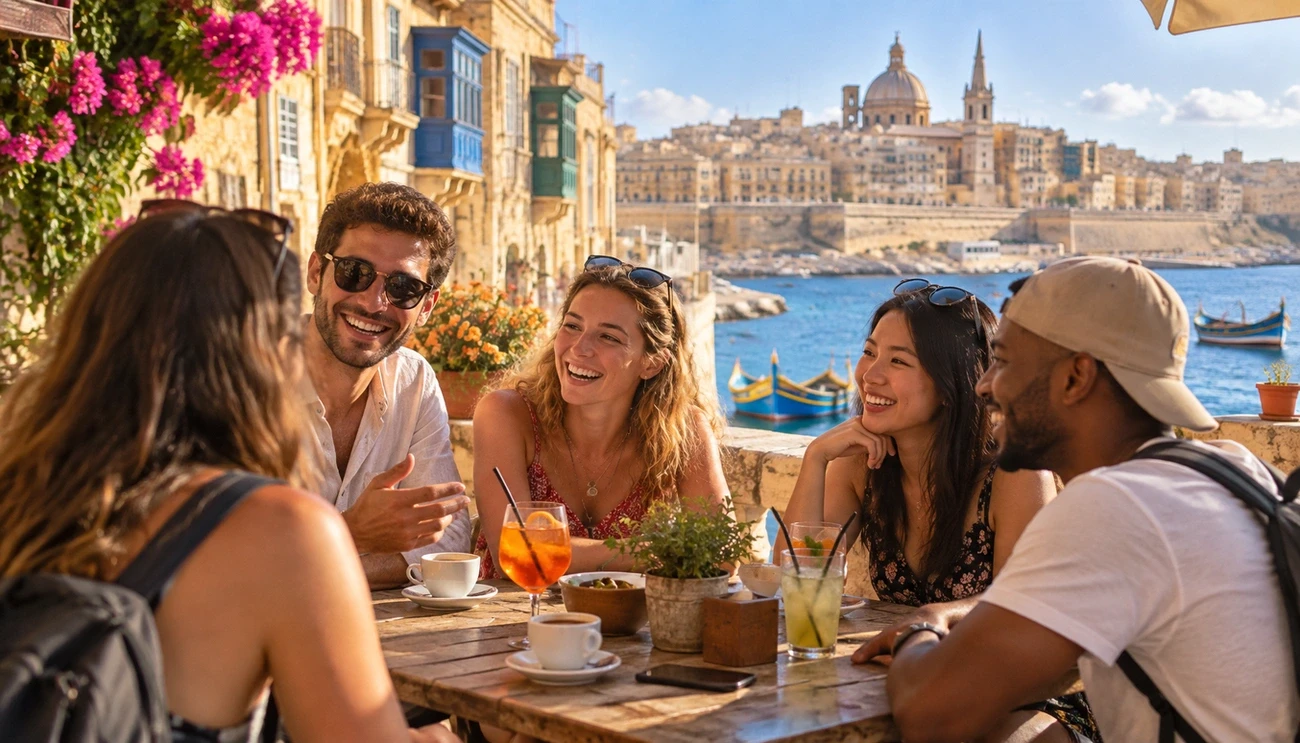
Making friends in Malta as a solo traveler sounds intimidating, but the reality is surprisingly different. The island's thriving international community, English-speaking locals, and constant flow of newcomers create the perfect conditions for building genuine connections.
The challenge isn't finding people to meet. It's knowing where to show up, how to start conversations, and which mistakes keep you stuck eating alone.
This guide walks you through practical strategies to build your social circle in Malta, from your first week to creating lasting friendships that go beyond surface-level small talk.
Why Malta Makes Friend-Making Easy for Solo Travelers
The International Community is Everywhere
Malta operates on a population of 500,000 people, yet the expat community alone counts over 50,000 active members in organized groups [1]. This ratio creates an unusual dynamic where international residents form a significant, visible presence rather than scattered individuals trying to find each other.
The Facebook group "Malta Expats" serves as the central hub with 50,000+ members posting multiple times daily [1]. Beyond this main community, nationality-specific groups maintain active calendars: British Residents Association Malta hosts regular events, Scandinavians in Malta connects Nordic expats, and Germans in Malta links through AHK Malta [1]. Dutch, French, Indian, and American communities run their own organized meetups [1].
Walk into any coworking space like SOHO Office Space, 230 Works, or Grand Central, and you'll encounter what locals call the modern town squares of Malta's business world [1]. These spaces host Happy Hours and Friday breakfasts where social and professional networking blur together [1]. In fact, many business relationships in Malta start over casual drinks at expat gatherings [1].
English as Common Ground
Malta's time as a British colony left locals speaking fluent English, removing the language barrier that complicates friend-making in most European destinations [2]. English stands as an official language, making conversations flow naturally from the first interaction [3].
This linguistic advantage extends beyond basic communication. You can attend any meetup, join any activity, or strike up conversations in cafes without the anxiety of fumbling through phrase books or translation apps. The locals' warm and welcoming attitude combines with their English fluency to create easy integration for newcomers [2].
Built-In Social Infrastructure
Malta doesn't require you to build a social life from scratch. Groups like "Internationals in Malta" organize welcome drinks specifically for newcomers, mixing professional networking with social activities [1]. Malta Expat Club maintains an organized events calendar featuring activity groups for hiking, diving, and business networking evenings [1].
Meetup.com runs "Malta Language Exchange," "Malta Hikers," and "Malta Digital Nomads" with events scheduled several times weekly [4]. Dive clubs such as Dive Zone Malta and Maltaqua coordinate regular group dives where friendships form automatically through shared underwater experiences [4].
The infrastructure extends to everyday spaces. Valletta's WiFi cafes like Coffee Corner, Cafe Cordina, and Trabuxu Bistro function as gathering spots where digital nomads work regularly and conversations start organically [4]. Furthermore, Malta ranks among the five safest countries in the EU, allowing solo travelers to explore these social venues without security concerns [4].
Public transport reliability adds another layer of accessibility. A EUR 1.57 bus ticket connects you to just about anywhere on the small island, eliminating the isolation that car dependency creates in other destinations [2].
High Turnover Means Fresh Opportunities
The constant flow of newcomers creates a perpetual welcome culture. Malta's large expat population generates regular turnover, with new arrivals seeking connections every week [1]. Being new actually works as an advantage rather than a liability because people remain curious about your background and story [1].
LinkedIn maintains unusually high activity levels for professional networking compared to other countries, reflecting how seriously Malta takes relationship-building [1]. The phenomenon locals call "min taf" (who you know) shapes the entire community, but this familiarity principle works in your favor [1]. Everyone truly does know everyone in this tiny nation, which means one genuine connection can rapidly expand your social circle through introductions and shared events.
Join Malta's Social Events and Communities
Weekly Meetups and International Gatherings
English Café Malta runs multiple weekly events specifically designed for making friends in Malta. Monday hosts Welcome Night for recent arrivals, Tuesday offers Talk Time for conversation practice, and Wednesday features Karaoke Night [5]. Friday and Saturday bring Rooftop Parties, while Sunday organizes hikes and excursions [5].
Thursday's International Meetup stands out with its "Bell Speed Friendship" game at Follow the Sun Hostel in St Julian's [1]. Over 100 guests attend weekly [1]. The game rings a bell every 10 minutes, signaling groups to switch and meet new people [1]. Entry costs €5 online or €7 at the door, both including a welcome drink [1]. The format runs 45-60 minutes starting around 21:00 [1]. A dedicated team member called the Matcher helps solo arrivals connect with others immediately [1].
The crowd mixes English students, expats, Erasmus participants, digital nomads, tourists, and Maltese locals [1]. Friday gatherings at seaside terraces draw similar numbers with Happy Hour specials and bucket deals on beer [1].
Language School Activities and Student Networks
Language schools provide built-in social structures. EC Malta and MaltaLingua organize guided tours, cultural excursions, beach outings, and sports activities [6]. These programs help students practice English in real situations while connecting with classmates from over 40 countries [6].
The activities extend beyond classroom walls. Schools arrange treasure hunts, dialog sessions, and theater visits [6]. Teachers participate in these activities, creating natural opportunities for conversation [6]. Schools also handle accommodation, particularly useful during summer when housing runs scarce [6].
Besides school-organized events, student networks naturally expand when you attend venues like English Café meetups where different schools converge [5].
Expat Networking Events
InterNations hosts regular gatherings for professional and social networking [1]. Their Ambassadors organize events at venues across Malta [1]. The platform includes activity-specific groups: Malta Culinary Exchange Group for food enthusiasts, Language Exchange Group for language practice, and Malta City Trotters for island exploration [1].
Internationals in Malta runs welcome drinks for newcomers alongside professional networking events [1]. Malta Expat Club maintains an organized calendar with hiking groups, diving activities, and business networking evenings [1]. The separation between social and professional blurs intentionally, as business relationships often start at casual expat gatherings [1].
Beach Clubs and Sports Groups
Diving and water sports dominate Malta's outdoor social scene [6]. Beach clubs in St Julian's, Sliema, and Paceville combine daytime relaxation with evening social atmosphere [7].
Online Groups That Lead to Real Meetups
Facebook and WhatsApp groups help discover events, but friendships form in person [5]. Platforms like Instagram function as event calendars rather than connection tools [5]. Guests report that after weeks of scrolling online groups, actually showing up to their first event made Malta feel like home [5]. Use these platforms to find gatherings, then appear in person where real connections happen.
Take Your First Steps in the First Week
Day 1-3: Show Up Even When You Don't Feel Ready
Base your first night in Sliema or St Julian's rather than Valletta if making friends in Malta quickly matters to you [8]. Valletta empties out after dark, while Sliema's waterfront promenade offers morning walks, solo-friendly cafes, and enough restaurants that eating alone at a bar counter never feels awkward [6].
Book one social group activity for day two once initial jet lag settles [8]. Walking tours work exceptionally well on your first full day because they provide a broad city overview while creating natural conversation opportunities with other travelers [9]. Show up at a Sunday morning coastal walk and you will end up at brunch with five new people [6].
Solo travelers gravitate to Two Pillows and Boho Hostel in Sliema for evening events, even when staying elsewhere [6]. These hostels function as social hubs where connections form easily.
At first, anxiety might tempt you to skip events. Go anyway. People remain so wrapped up in their own thoughts that they likely haven't noticed your nervousness [10]. In a day or two you'll probably never see these people again, so who cares [10].
Day 4-5: Suggest Simple Plans After Activities
Tours naturally create acquaintances through shared experiences [1]. On a Gozo day trip, one traveler met another American and joined her plus a hostel friend for dinner that evening [1]. The key shift happens when you move from attending to initiating.
After group activities end, suggest simple next steps. "Want to grab dinner?" works better than waiting for others to invite you first. Equally important: say yes when others extend invites, especially for activities outside your comfort zone [10].
Day 6-7: Create Your Regular Spots
Establish a daily routine by going to the same cafe every morning [11]. The familiarity helps you gain confidence, making it easier to open up to others [11]. One expat discovered that repeating a pottery class transformed her from "the quiet English girl in the corner" to a regular with coffee plans [12].
Book a bar seat, not a table [6]. Bring a paperback, not your phone [6]. Order at least one course and one glass of wine, then tip slightly above local norm [6]. Staff will make sure you feel taken care of, and neighboring diners see you as approachable rather than isolated.
Start Conversations Without Overthinking
A compliment about what someone is wearing or an observation about the weather opens conversations naturally [11]. Follow with simple questions: "Where are you from?" "How long have you been in Malta?" [13]. These standard questions form instant connections in hostels and meetups [10].
Start with offhand comments. "What a view!" or "This is spectacular!" can launch conversations [14]. The magic sentence that works almost every time in Malta: "Hey, are you new here too?" [13].
Gradually building confidence through repeated small talk reduces anxiety [15]. At the same coffee shop, greet the staff with "Bonġu" (good morning) [16]. Learn the name of the corner shop worker [12]. These daily touchpoints weave you into the community fabric, transforming you from tourist to familiar face.
Build Deeper Connections Beyond Small Talk
Join Weekend Excursions and Day Trips
Friendships grow faster when you share experiences [7]. Join weekend trips, hikes, or beach days where you discover new places and create memories with people who could become close friends [7]. Weekend excursions to Comino, Blue Grotto, or coastal hikes are designed exactly for this purpose: small groups, shared adventures, and easy conversations [7].
Group tours across Malta showcase UNESCO World Heritage Sites, historic cities, stunning coastlines, and authentic villages through professionally managed travel experiences [17]. From the magnificent streets of Valletta and medieval charm of Mdina to the spectacular landscapes of Gozo and crystal-clear waters of Comino, these excursions provide exceptional value and authentic local experiences [17].
Share Experiences Not Just Drinks
Nightlife creates quick connections, but conversations remain short and fast [18]. Mix nights out with social events or outdoor activities to turn party connections into real friendships [18]. The challenge lies in moving beyond superficial interactions [5]. While connecting over shared grievances or holiday plans feels easy, nurturing deeper friendships requires time, vulnerability, and consistent effort [5].
Sports clubs offer one of the quickest ways to build a local network, whether football, basketball, swimming, water polo, trail running or bouldering [5]. Team sports create immediate camaraderie and a sense of belonging [5]. Hiking groups organize weekly walks across coastal paths, while diving trips explore shipwrecks and marine life [5]. These activities often involve post-activity coffee or drinks, providing natural settings for conversation and bonding [5].
Create Recurring Meetups at the Same Places
Be proactive with invitations rather than waiting for others to extend them [5]. Say "I really enjoyed chatting; would you like to grab a coffee sometime next week?" or "I'm planning to check out this new restaurant; would you be interested in joining?" [5]. Single interactions rarely lead to strong friendships; repeated small gestures build rapport [5].
Balance Solo Time with Social Energy
Extroverts energize through large groups and external stimulation, whereas introverts recharge in low stimulus environments [19]. Social interactions release dopamine and serotonin, alleviating anxiety and stress while increasing confidence and self-esteem [1]. Balance remains crucial [1]. Networking and socializing lead to incredible opportunities, but quality matters over quantity [1].
Not all social activities drain or energize equally [9]. Prioritize events that align with your passions and values [9]. Schedule less than what you think you can handle to prevent burnout [9]. Reach out to friends before loneliness creeps in, and plan weekly social activities you can count on [9].
Common Mistakes That Keep You Isolated
Waiting for Others to Invite You First
Going up to people proves far more effective than waiting for them to approach you [13]. Acquaintances don't spring from nothing, so take initiative to establish connections [13]. Without being pushy, continue putting in effort by asking those you want friendships with to grab drinks or hang out [13]. Single interactions rarely lead to strong friendships; commitment and consistency matter because getting to know someone takes time [13].
Changing Locations Too Often
Commitment and consistency build comfort around each other [13]. Hopping between accommodations or cafes prevents the repeated interactions that transform strangers into friends.
Staying in Your Language Comfort Zone
Sticking exclusively with the expat community prevents you from understanding and immersing yourself in local culture [12]. The expat bubble offers comfort but creates isolation, leading to missed opportunities for meaningful connections [20]. Engaging with locals allows for richer interactions that lead to lasting friendships and deeper understanding [20].
Judging Too Quickly in the First Days
What you think is happening and what is really happening can differ, especially when you're not directly involved [21]. You lack crucial information including their past experiences, current situation, and what they feel in that moment [21]. Judgment arises from sensitivity, insecurity, or jealousy based on our lived experiences [22].
Comparing Your Journey to Instagram Highlights
Social media shows highlights and misses the loneliness, language barriers, and culture shocks travelers face [23]. Bloggers pose by the ocean explaining how they met natives who became instant besties, but young people then think they have problems when similar experiences don't happen [23]. Instagram remains a highlight reel; most days involve working, doing laundry, and living normally [24].
Conclusion
You now have the complete roadmap for making friends in Malta, from finding your first meetup to building genuine connections that last beyond small talk. Malta's welcoming international community, constant flow of newcomers, and organized social infrastructure remove the biggest obstacles solo travelers typically face.
The difference between staying isolated and building your social circle comes down to showing up consistently, taking initiative with invitations, and giving friendships time to develop naturally. Indeed, most connections happen when you stop overthinking and simply appear at the same places week after week.
Start with one event this week. The rest will follow naturally from there.
References
[1] - https://theproductivewoman.com/the-art-of-balancing-solo-and-social-time-tpw488/
[2] - https://internationalliving.com/countries/malta/
[3] - https://www.explore.com/2142866/malta-underrated-european-destination-mediterranean-getaway-solo-travelers/
[4] - https://malta-wakacje.pl/en/artykuly/malta-solo-travel-guide-safety-tips-accommodation
[5] - https://maltahandbook.com/building-a-social-life-in-malta-community-events-and-making-friends/
[6] - https://maltatripplanner.com/stories/solo-traveler-malta-guide
[7] - https://englishcafemalta.com/blog-malta/how-to-make-friends-in-malta/
[8] - https://www.malta-spirit.com/guides/malta-for-solo-travelers/
[9] - https://introvertspring.com/6-tips-to-balance-alone-time-and-socializing/
[10] - https://sweetmeanders.co.uk/solo-travel-tips-for-a-shy-person/
[11] - https://www.flashpack.com/us/solo/relationships/friendship/talking-to-strangers-travel/
[12] - https://www.internations.org/guide/global/living-in-another-country-blending-in-15286
[13] - https://jetsettimes.com/travelers/how-to-make-friends-and-meet-people-in-new-places/
[14] - https://solotravelerworld.com/solo-travel-introvert/
[15] - https://thetravelpsychologist.co.uk/how-can-i-travel-solo-with-social-anxiety/
[16] - https://sologuides.com/malta/
[17] - https://excursionsinmalta.com/group-travel-malta/malta-group-excursions/
[18] - https://englishcafemalta.com/blog-malta/best-places-to-meet-people-in-malta/
[19] - https://tinybuddha.com/blog/balancing-social-time-and-solitude-finding-your-golden-ratio/
[20] - https://nlsnorwayrelocation.no/the-expat-bubble-the-comforts-and-dangers-of-not-integrating/
[21] - https://instituteofyou.org/why-we-shouldnt-judge-people-too-quickly/
[22] - https://www.hannahhendersontravel.com/we-all-travel-differently-so-why-do-we-judge-others/
[23] - https://www.reddit.com/r/solotravel/comments/191ohnn/do_you_think_social_media_has_been_positive_or/
[24] - https://www.facebook.com/61577578298446/posts/just-your-reminder-that-instagram-is-a-highlight-reel-mine-included-️i-love-trav/122220620774919276/